Move out charges that follow each item's age, life and condition
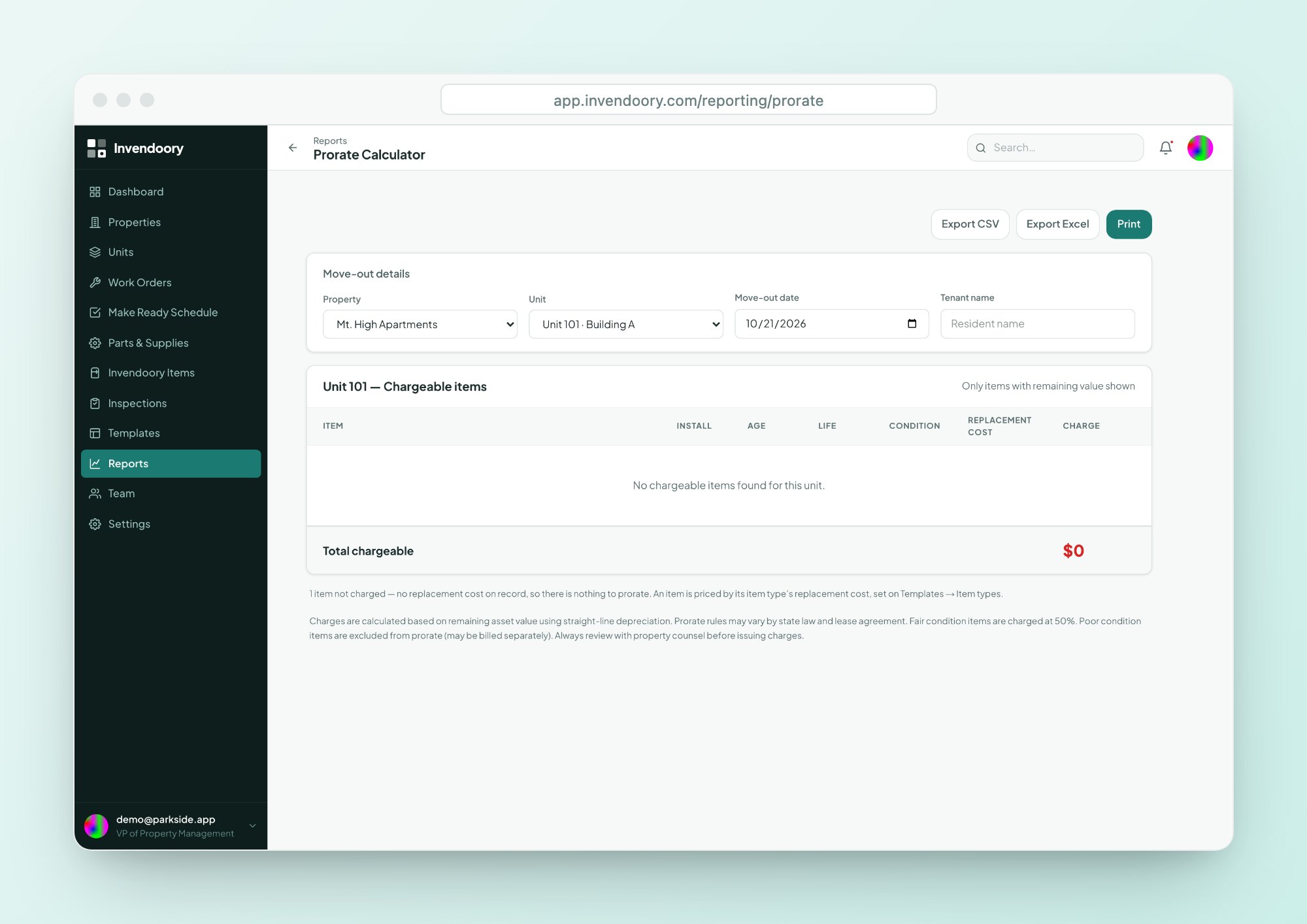
The Prorate Calculator works out a charge per item from how old it is, how long it should last and what shape it is in. Your move out charges stop being a guess, and every number traces back to the unit’s inventory.
A resident disputes the carpet charge, and nobody knows when it went in
Move-out season is where weak records cost money, and move out charges are where it shows. A resident disputes a charge. You open the file, and there is no install date for the carpet, no age for the refrigerator and no proof of condition at move-in.
So the charge gets negotiated down, or written off, or built from a flat number someone made up. Move out charges and security deposit deductions that cannot be explained are the ones that get challenged.
Move out charges that hold up start with three facts: how old the item is, how long it should last and what condition it is in. Invendoory already records all three.
How move out charges are calculated for each item
The calculator uses straight-line depreciation, and the formula is the same for every item:
charge = replacement cost x remaining life x condition factor, rounded to the nearest $50.
Remaining life is 1 minus the item’s age divided by its expected life, and it never drops below 0. A refrigerator in its last year is not charged for life it no longer has.
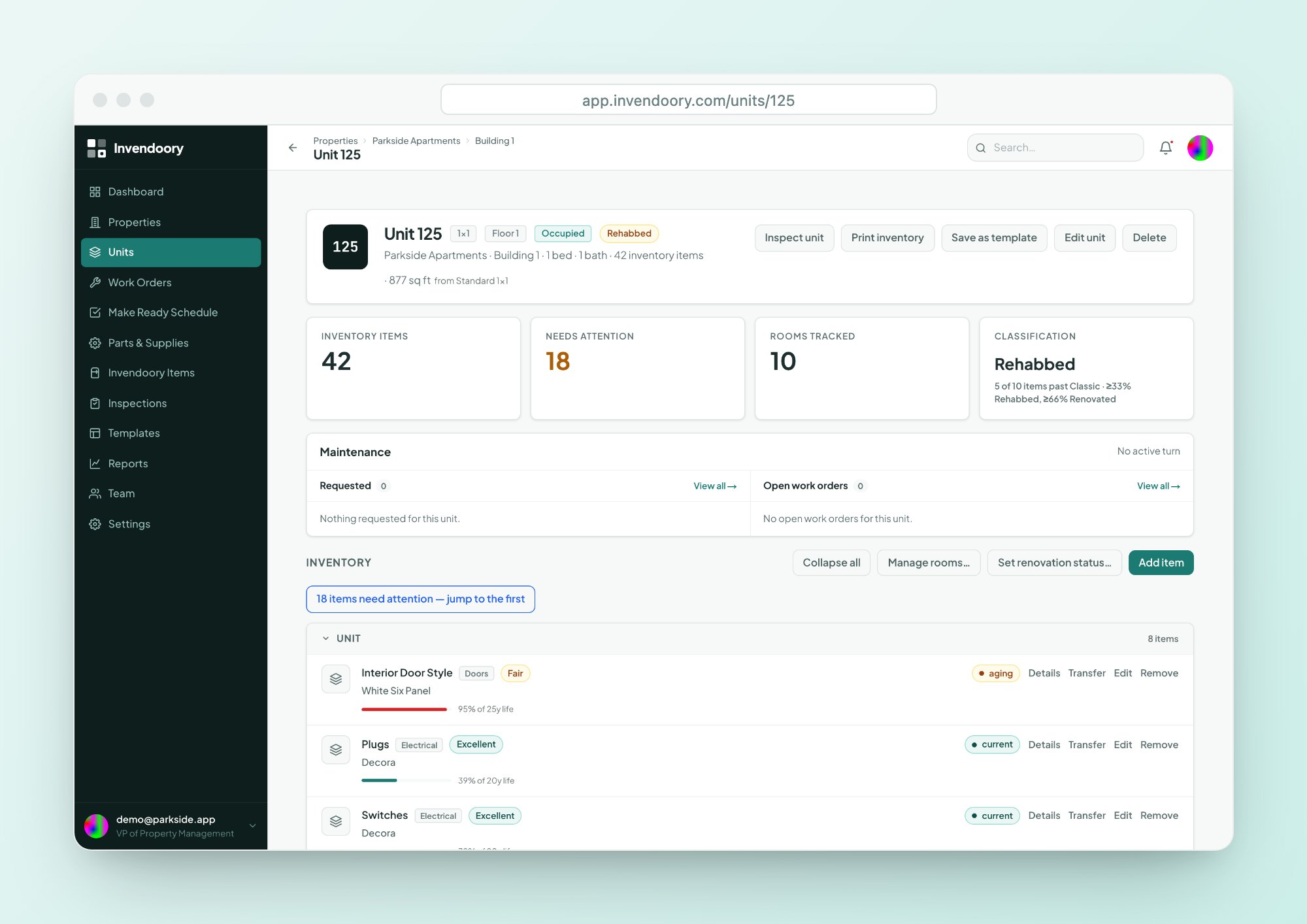
- Replacement cost comes from the item’s record
- Remaining life = 1 – (age / expected life), never below 0
- Condition factor: Excellent and Good 100%, Fair 50%
- Poor items are excluded from the total
- Results round to the nearest $50
Six items, six outcomes
A 6-year-old refrigerator with a 15-year expected life has 60% of its life left. At a $1,100 replacement cost in Good condition, that is $660, which rounds to $650.
| Item | Age / expected life | Replacement cost | Condition | Remaining life | Condition factor | Charge |
|---|---|---|---|---|---|---|
| Refrigerator | 6 of 15 years | $1,100 | Good | 60% | 100% | $660, rounds to $650 |
| Carpet | 7 of 10 years | $1,800 | Fair | 30% | 50% | $540 x 50% = $270, rounds to $250 |
| Water heater | 8 of 12 years | $900 | Excellent | 33.3% | 100% | $300, rounds to $300 |
| Dishwasher | 4 of 12 years | $600 | Good | 66.7% | 100% | $400, rounds to $400 |
| Dryer | 14 of 13 years | $800 | Good | 0% | 100% | $0, past its expected life |
| Range | 12 of 15 years | $1,200 | Poor | 20% | Excluded | Excluded, may be billed separately |
Sample figures to show the arithmetic. Your replacement costs and expected lives come from your own item records.
Normal wear and tear, damage and the Poor rating
Condition is where move out charges usually get argued. Excellent and Good items count at 100% of their remaining life. Fair items count at 50%. Poor items are left out of the calculated total entirely.
That last rule is deliberate. An item rated Poor may involve damage rather than normal wear and tear, and that call belongs to you, your lease and your counsel. The calculator does not decide it. Poor items stay out of the total and may be billed separately.
- Fair items carry half their remaining value
- Poor items never silently inflate a total
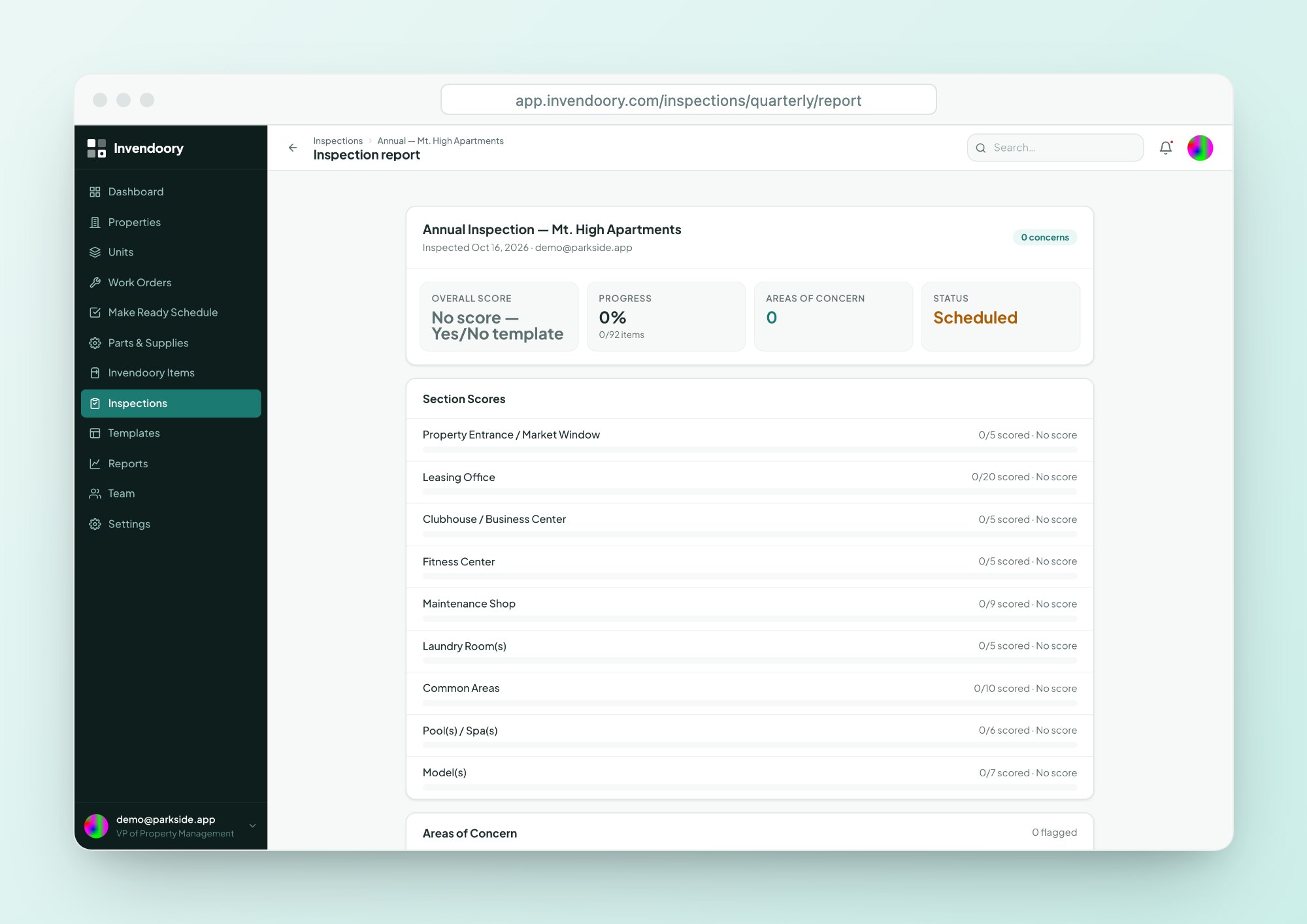
- Condition ratings come from inspections and turns
What gets excluded, and why you see the count
The calculator never invents a number to fill a gap in your move out charges.
No install date
Without an install date, there is no age. The item is excluded and counted, never guessed.
No replacement cost
Without a replacement cost, there is nothing to multiply. The item is excluded and counted.
Poor condition
Poor items are excluded from the calculated total. They may be billed separately, at your call.
Default expected lives for appliance and carpet depreciation
When an item has no expected life of its own, these defaults apply. They are the starting point for appliance depreciation and carpet depreciation, and you can see each item’s number in its record.
| Item | Default expected life |
|---|---|
| Refrigerator | 15 years |
| Range | 15 years |
| HVAC | 15 years |
| Dryer | 13 years |
| Dishwasher | 12 years |
| Washer | 12 years |
| Water heater | 12 years |
| Microwave | 10 years |
| Flooring | 10 years |
| Paint | 7 years |
Review with counsel, then record the charge
Prorate rules vary by state law and lease agreement. Review the results with property counsel before issuing charges to residents. The calculator gives you consistent, explainable move out charges to start from. It is not legal advice.
When you do charge a resident or vendor, record it as a chargeback during the inspection. Chargebacks are audited, locked after 30 days and protected from deletion. Invendoory records the charge. It does not bill or collect it. See how inspections handle chargebacks.
Move out charge questions
How does the Prorate Calculator work out move out charges?
It multiplies the item’s replacement cost by its remaining life and a condition factor, then rounds to the nearest $50. Remaining life is 1 minus age divided by expected life, never below 0. Excellent and Good count at 100%, Fair at 50%, and Poor items are excluded from move out charges.
What happens to items with no install date or cost?
They are excluded and counted. The calculator never guesses an age or a price, so a charge you issue never rests on an invented number. You can see how many items were left out, then open those items and fill in the missing install date or replacement cost.
Does it decide what counts as normal wear and tear?
No. It applies the same condition rules to every item. Whether a worn or damaged item is chargeable depends on your lease and state law, so Poor items stay out of the calculated total and you decide separately whether normal wear and tear or damage applies.
Can I rely on it for security deposit deductions?
Use it as a consistent, documented starting point. Prorate rules vary by state law and lease agreement, so review the numbers with property counsel before issuing charges. The calculator records the logic behind each figure, not the legal conclusion about what you may deduct.
Does Invendoory bill the resident?
No. A chargeback in Invendoory is a record of the charge, audited and locked after 30 days. Billing, collections and accounting stay in your property management system. Reports export to CSV and Excel if you need the figures elsewhere, such as in a deposit statement.
Run move out charges on sample data
Open the live demo to see the calculator on a unit with real-looking items. No signup required. You can also read about the asset inventory behind it.