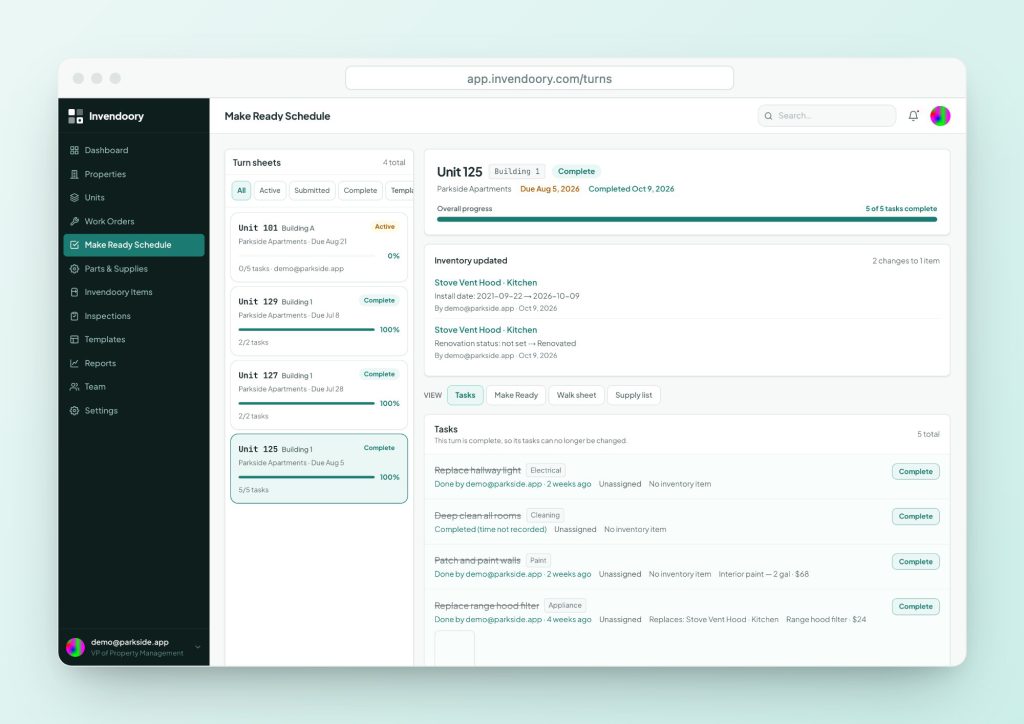
Garbage disposal life expectancy is about 12 years in the NAHB study and the InterNACHI chart. This guide covers what shortens it, how to find the age from the serial number and how to track disposals across a portfolio.
How long does a garbage disposal last?
The two main references agree on one number, and a multifamily table adds a harder-use case.
| Source | Disposal life | Notes |
|---|---|---|
| NAHB and Bank of America (2007) | 12 years | Food waste disposers |
| InterNACHI | 12 years | Disposal (food waste) |
| Fannie Mae multifamily table | 5 years (7 for seniors housing, 3 for student housing) | Common-area disposals, such as a clubhouse kitchen |
| InSinkErator | No published lifespan | Warranty length varies by model |
InSinkErator describes its grind components as built to last but gives no number of years on the product page we checked. Use the warranty for your specific model as a guide to the maker’s expectations.
What the garbage disposal life expectancy figures mean
A 12-year garbage disposal life expectancy is the figure to use for in-unit disposals in normal residential use. A disposal is inexpensive next to a refrigerator or a water heater, so the budget impact is small. The cost is the work order, and the cost of a leak under a cabinet.
Fannie Mae’s multifamily table is a reminder that heavy use shortens life. It lists common-area disposals at 3 to 7 years, which is a shared kitchen with constant use, not a typical apartment. If you have a clubhouse, a leasing office kitchen or a model unit, set a shorter expected life on those.
Heavy use, jams and overloading are the usual suspects for an early failure. The sources do not quantify this, so use your own replacement history to adjust.
How old is the disposal? InSinkErator serial number lookup
Enter an InSinkErator serial number to get the build date. The guide to the InSinkErator serial number format explains how to read it, and the appliance age finder covers other brands.
Reading an InSinkErator serial number
The InSinkErator serial number is on the data label on the body of the disposal, under the sink. In an occupied unit you need to look under the sink, and in a vacant unit the turn is the cheapest time to photograph the label.
The decoded date is the build date. Add the install date to the record as well, because a disposal that was built in one year and installed in another has an age somewhere between the two.
In Invendoory you can attach up to 20 photos to an item and tag one as the serial plate, so the label is on file and nobody needs to crawl under the sink again.
Track garbage disposals on every unit
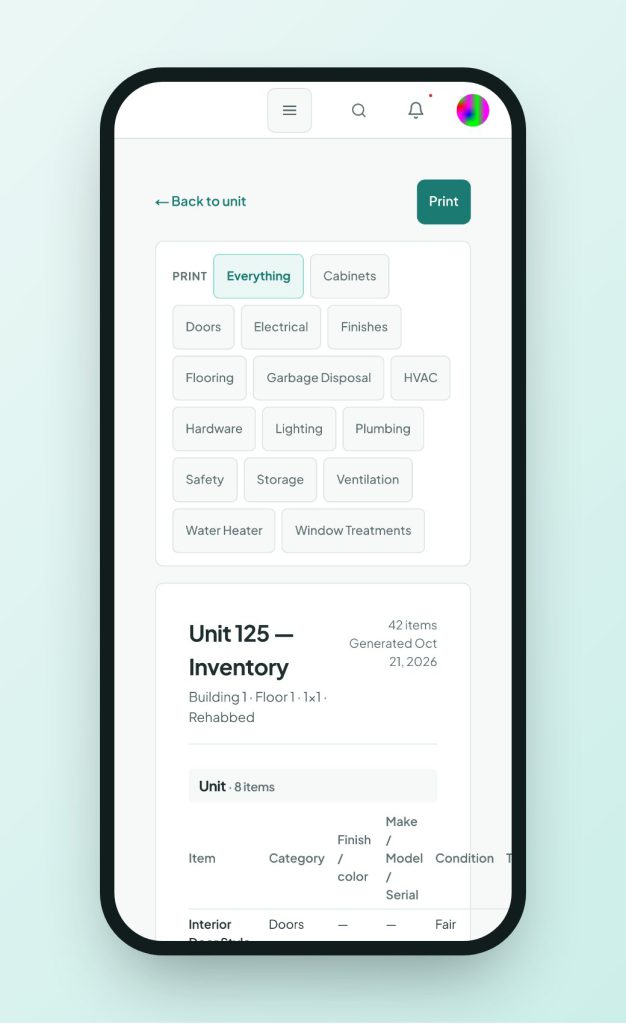
A disposal is an item in the Kitchen, with make, model, serial, install date, warranty expiry and expected life. Disposals have their own detail, horsepower, so you can see the motor size on each unit.
Set the expected life on disposals to match the figure you trust, such as 12 years, and the life used bar does the rest: green under 60%, amber from 60 to 80%, red above 80%. The record also shows a warranty badge and Repair, Monitor or Replace guidance from fixed age and condition rules.
- Horsepower recorded on the item
- Up to 20 photos per item, with a serial plate tag
- Life used bar and warranty badge
Replace disposals on the turn and keep the record current
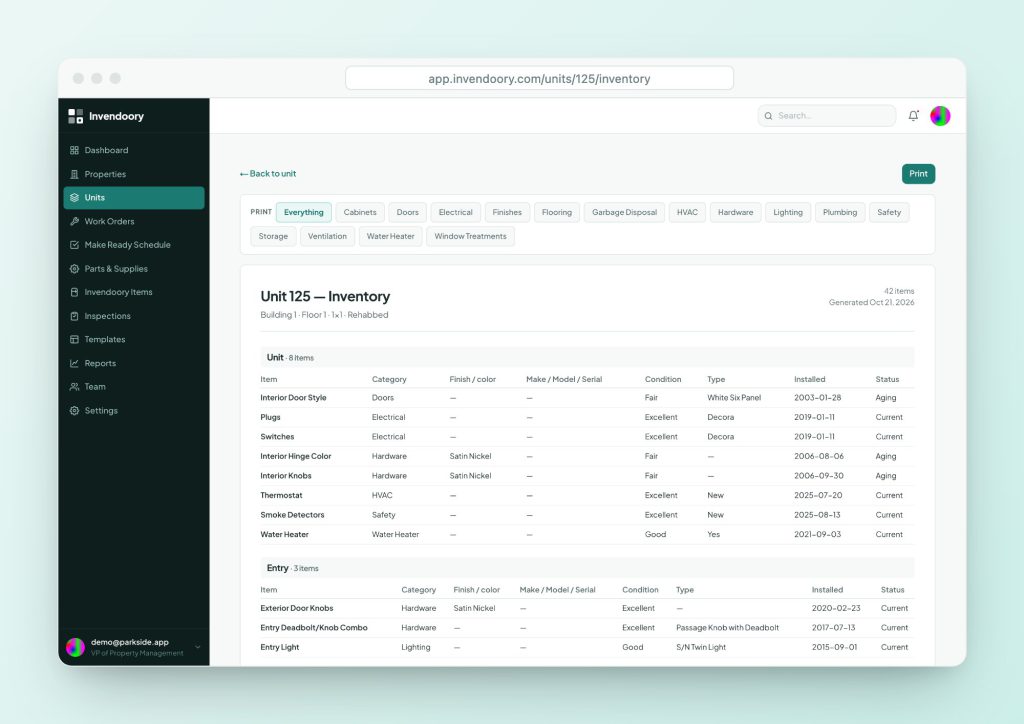
A disposal that is amber at turn is a cheap swap while the unit is empty. Mark the item Replaced on the turn sheet, with the part that went in. When a property manager verifies the sheet, the replaced item becomes a new install in the unit’s inventory with today’s date and the part’s make and model.
That is how the age stays right without anyone retyping a spreadsheet. See Make Ready for the full flow, and the appliance life expectancy chart for the other categories.
- Mark the item Replaced with the part that went in
- Verification writes the new install into the inventory
- History records the change
Garbage disposal life expectancy questions
How long do garbage disposals last?
NAHB and InterNACHI both list 12 years for a food waste disposer. Fannie Mae lists 3 to 7 years for common-area disposals in multifamily buildings, where use is heavy. Use 12 for in-unit disposals and a shorter number for shared kitchens.
Where is the serial number on an InSinkErator?
On the data label on the body of the disposal, under the sink. Take a photo of the label at turn and tag it as the serial plate. Then you can decode the build date without a second visit.
Does InSinkErator publish a lifespan?
Not that we found on the product page we checked. It describes its grind components as built to last and offers an in-home limited warranty, with warranty length varying by model. Treat the warranty as a guide, not a lifespan.
Should I replace a disposal on every turn?
Not necessarily. A disposal that is green on the life used bar and works can stay. One that is amber or red, leaks or jams repeatedly is worth swapping while the unit is empty, because the part is cheap.
Does Invendoory have a default expected life for disposals?
You set the expected life on each item. Choose a figure you trust, such as the 12 years in NAHB and InterNACHI, and the life used bar and years left follow. The app also records disposal horsepower.
Sources
- NAHB and Bank of America Home Equity, Study of Life Expectancy of Home Components (2007)
- InterNACHI, Estimated Life Expectancy chart
- Fannie Mae, Multifamily Property Condition Assessment, Appendix F Estimated Useful Life Tables (Form 4099.F, 10/14) (Common-area disposal row.)
- InSinkErator, Quality Products That Last
Checked October 2026.