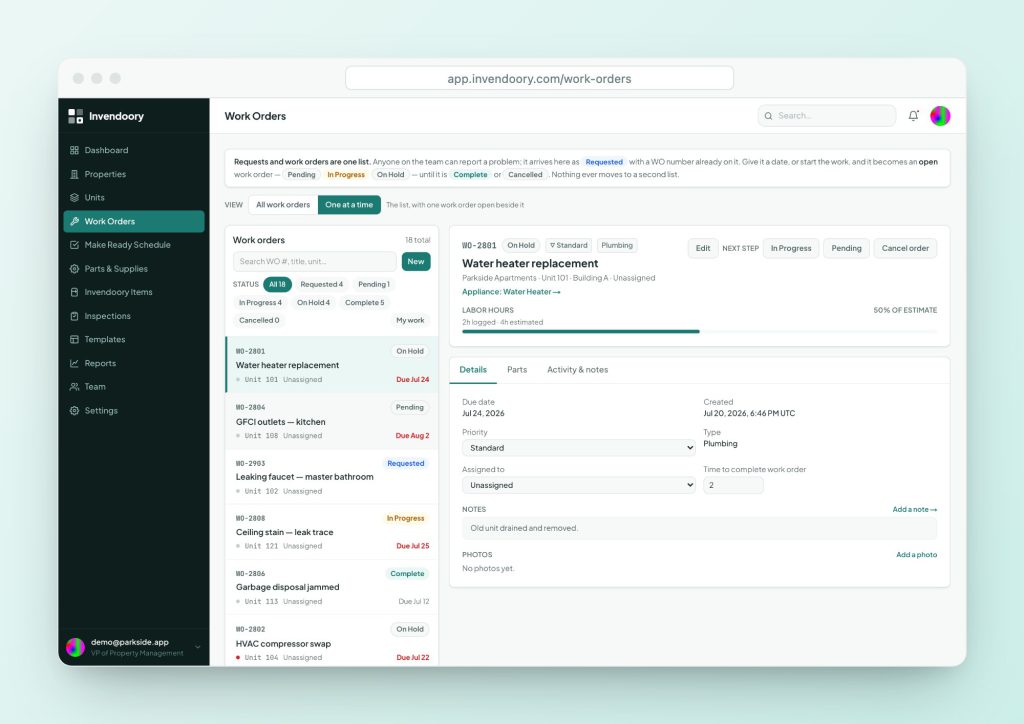
Water heater lifespan runs from about 8 years for a tank in hard water to 20 or more for a tankless unit. This guide gives the ranges by type, the signs a unit is failing and how to plan replacements across hundreds of units.
How long do water heaters last?
The honest answer is a range, and the sources differ. The table shows what each one says.
| Type | Published lifespan | Source |
|---|---|---|
| Tank, gas | 10 years | NAHB 2007 study |
| Tank, electric | 11 years | NAHB 2007 study |
| Tank, conventional | 6 to 12 years | InterNACHI |
| Tank, conventional | 8 to 12 years | Rheem |
| Storage tank, any fuel | 10 to 15 years | U.S. Department of Energy |
| Unit-level hot water, multifamily | 10 years (15 for seniors housing) | Fannie Mae multifamily table |
| Tankless | 20 or more years (NAHB, DOE); 15 to 20 or more (Rheem); 10 (InterNACHI) | NAHB, DOE, Rheem, InterNACHI |
| Heat pump (hybrid) tank | No federal figure found; plan like an electric tank and check the model’s warranty | Not established |
Planning ranges, not guarantees. InterNACHI’s tankless figure is much lower than the others, so check which model type a source means.
Which type has the longest water heater lifespan?
Tankless units have the longest water heater lifespan on paper. The Department of Energy says they can last more than 20 years, against 10 to 15 for storage tanks. A tank holds and heats water all day, and that constant load is what wears the tank and its lining.
Heat pump water heaters are a newer category in apartments. We did not find a federal lifespan figure for them, and Rheem’s lifespan article does not cover them. Treat them like an electric storage tank until the manufacturer’s warranty and your own replacement history say otherwise.
For multifamily planning, Fannie Mae puts a unit-level water heater at 10 years for standard multifamily, which is a sensible cap when you set an expected life.
What shortens and extends water heater lifespan
Manufacturers agree on the same few factors.
What shortens it
Rheem lists hard water, heavy household demand and skipped maintenance. Sediment builds on the tank floor and lowers efficiency, and water pressure above the 40 to 60 psi Rheem recommends stresses the tank and fittings.
What extends it
A. O. Smith says most tank heaters need flushing at least once a year, more often in hard water. It also says to check the anode rod yearly and replace it when several inches of core wire show, and to keep the thermostat at 120°F or lower.
How old is my water heater?
Enter the brand and the serial number from the rating label to get the build date. The page on water heater age by serial number also links to Bradford White, A. O. Smith and Rheem.
Finding the age of a water heater in the field
Every water heater carries a rating label with the model and serial number. Manufacturers encode the build month and year in the serial in different ways, which is why a brand-specific decoder helps. A heater is installed some time after it is built, so the build date is an upper bound on its age, not the install date.
So record two things: the build date from the serial and the install date from your own records. When the install date is unknown, the build date is a safe place to start.
Signs a water heater is failing
Rheem lists these warning signs. Any of them on a unit past 10 years is a reason to plan, not wait.
1. Leaks at the base
Water leaking from the base of the tank points to a failing tank. A small valve or fitting leak may be repairable.
2. Rust or discolored water
Rusty hot water is a warning sign, and internal corrosion may not show from outside.
3. Rumbling or popping
Persistent noise comes from hardened sediment on the tank floor.
4. Repeat repairs
Recurring problems at 10 to 15 years, or repairs above 50% of a new unit’s price, favor replacement.
Water heater strapping requirements
Water heater strapping requirements depend on where you operate. California is the clearest example. Health and Safety Code section 19211 says all new and replacement water heaters, and all existing residential water heaters, must be braced, anchored or strapped against falling or horizontal movement in an earthquake. The minimum standard is the California Plumbing Code, and the section covers standard heaters up to 120 gallons. It also says an owner may not evict a resident in order to comply.
Other states and cities set their own rules, and local codes can be stricter. Ask your building department before you assume a rule applies or does not. This is general information, not legal advice.
Invendoory records the water heater type (gas, electric, tankless or heat pump), the gallons and whether the heater is properly strapped, so a strapping check becomes a filterable fact on the item, not a memory.
Plan water heater replacements across hundreds of units
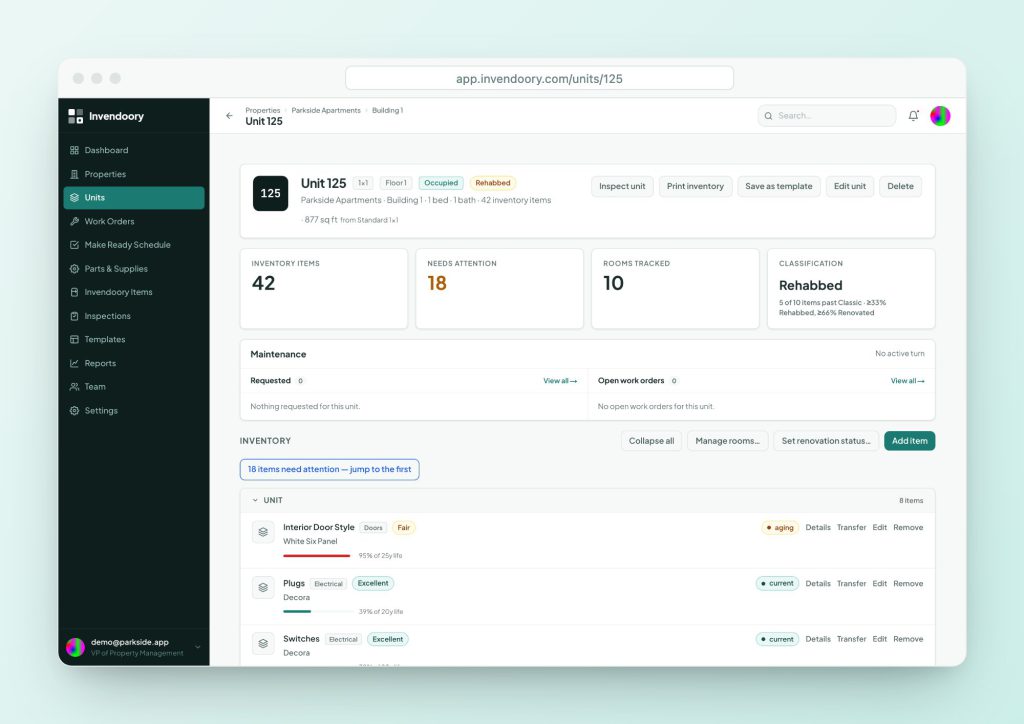
Set the expected life on water heaters and Invendoory shows a life used bar for each one. With Invendoory’s default of 12 years, a heater is green under 60% (about 7 years), amber from 60 to 80% and red above 80% (past 9.6 years). The record also shows a warranty badge, and managers get a heads-up starting 30 days before a warranty expires.
The units table can add a column for water heaters showing the installed item and its years of life left, so heaters installed in the same year sit together in the list. Repair, Monitor or Replace guidance comes from fixed age and condition rules.
- Default expected life of 12 years, editable per item
- Life used bar: green under 60%, amber 60 to 80%, red above 80%
- Warranty badge and a notification 30 days before expiry
Bundle the replacements by property and quarter
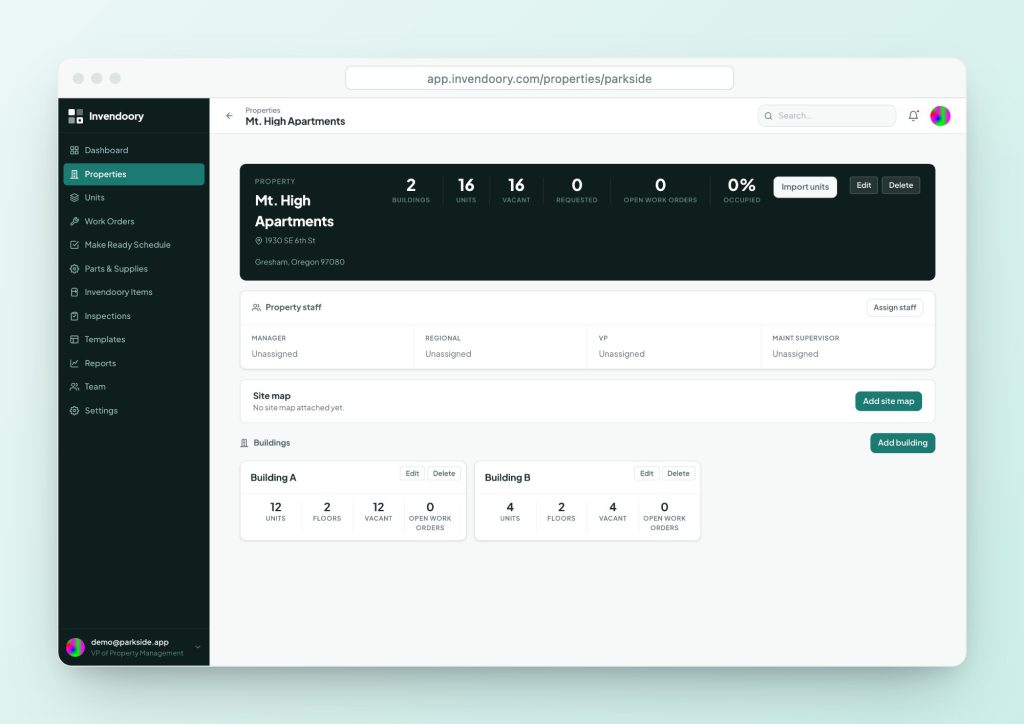
Once years left is visible, you can group replacements the way a supervisor schedules them: by building and by quarter. That keeps plumber visits efficient and keeps the capital line honest. When a tech finishes a replacement through a work order, the appliance record updates with the new make, model, serial and warranty.
For how this feeds the bigger picture, read capital planning for multifamily and the full appliance life expectancy chart.
- Group by building and quarter
- A completed replacement updates make, model, serial and warranty
- Compare against budget in the Budget Projection report
Water heater lifespan questions
How long do water heaters last in apartments?
Plan on 10 to 12 years for a tank. NAHB says 10 for gas and 11 for electric, Rheem says 8 to 12, DOE says 10 to 15, and Fannie Mae uses 10 for a unit-level heater in standard multifamily. Hard water and skipped flushing push the real number lower.
How long does a tankless water heater last?
The Department of Energy says more than 20 years, NAHB says 20 or more and Rheem says 15 to 20 or more with proper care. InterNACHI lists 10, so check which model a source describes.
How old is my water heater if the sticker is hard to read?
Find the serial number on the rating label and decode the build date with a brand-specific tool. Build date is not install date, so add the install date from your records if you have it. Photos of the label, taken at inspection, keep the serial from being lost.
Do I have to strap a water heater?
In California, yes: section 19211 requires bracing, anchoring or strapping for standard residential heaters up to 120 gallons. Other states and cities vary, and local codes can be stricter. Ask your local building department. This is not legal advice.
When should I replace instead of repair?
Rheem points to leaks at the base, rusty water, recurring problems past 10 to 15 years and repairs above 50% of a new unit’s price. A heater in the red on the life used bar with a leak is usually a replacement.
Sources
- NAHB and Bank of America Home Equity, Study of Life Expectancy of Home Components (2007)
- InterNACHI, Estimated Life Expectancy chart
- U.S. Department of Energy, Energy Saver Guide (2022) (Storage 10 to 15 years, tankless more than 20.)
- Fannie Mae, Multifamily Property Condition Assessment, Appendix F Estimated Useful Life Tables (Form 4099.F, 10/14)
- Rheem, Water Heater Lifespan: When to Repair vs. Replace
- A. O. Smith, Water Heater Maintenance Guide
- California Health and Safety Code section 19211 (Public.Law)
Checked October 2026.