An annual apartment inspection is a yearly walk of the inside of each unit. This annual inspection checklist uses yes/no questions so every answer is a clear pass or fail, with notes and photos for the fails.
What an annual apartment inspection is for
An annual unit inspection (also called an annual apartment inspection) is the once-a-year interior walk of a rental unit. It finds slow leaks, safety-device failures, deferred repairs and lease violations while they are still cheap to fix. It also refreshes the record of what is installed in the unit and how it looks.
Entry rules matter. Most states and many leases require written notice before a landlord enters an occupied unit, and the required notice varies by state, so check yours before scheduling. Nothing here is legal advice. Pair it with a preventive maintenance checklist for the building systems a unit walk does not reach.
Print this page. The site prints cleanly, so each table is a worksheet. Tick Yes or No, and write a note for every No.
Why yes/no works for annual inspections
The Annual Unit Inspection that ships as an example in Invendoory is all yes/no. Every question has a clear answer: it works, or it does not. For a once-a-year walk across hundreds of units, a binary list is faster, more consistent between inspectors and easier to turn into work orders. Scores like 3 versus 4 invite argument. A No is a task.
The tradeoff is that an all yes/no template has no score percentage. You report on counts of failures and concerns instead. If you want a score, use a 0 to 5 template for the parts of the inspection that are about quality, like paint and landscaping.
Entry, living room and hallways
| Done | Yes / No question | Why it matters |
|---|---|---|
| ☐ | Does the entry door close, latch and lock properly? | Security and egress. |
| ☐ | Are all windows operable, lockable and free of broken glass or failed seals? | Egress, security and energy loss. |
| ☐ | Is all lighting functional? | Safety and resident satisfaction. |
| ☐ | Are paint and walls free of noticeable damage or patches? | Condition record; start of a charge conversation at move-out. |
| ☐ | Is the floor free of damage and trip hazards? | Liability and condition record. |
| ☐ | Are smoke detectors in working order? | Test each one. NFPA says test monthly and replace at 10 years. |
| ☐ | Are blinds complete and operating? | Common turn expense found early. |
| ☐ | Is the thermostat working and the vent clear? | Comfort and system load. |
Kitchen
| Done | Yes / No question | Why it matters |
|---|---|---|
| ☐ | Is the anti-tip bracket installed and the range engaged in it? | CPSC says the bracket should be attached and the range held securely in it. |
| ☐ | Do all burners, the oven and the hood fan work? | Fire risk and complaints. |
| ☐ | Is the refrigerator cold with seals intact? | Spoiled food claims and efficiency. |
| ☐ | Does the dishwasher run without leaking? | Slow leaks cause floor damage. |
| ☐ | Is the area under the sink dry, with no corrosion or leaks? | The most common hidden leak. |
| ☐ | Do the faucet and drain work normally? | Standing water and low flow indicate other problems. |
| ☐ | Are cabinets, hinges and counters in good condition? | Condition record. |
Bathrooms
| Done | Yes / No question | Why it matters |
|---|---|---|
| ☐ | Does the toilet flush and reseal, with no rocking or leaks at the base? | Hidden floor and subfloor damage. |
| ☐ | Are tub, shower, tile and caulk intact, and do the fixtures work? | Water intrusion. |
| ☐ | Is the bathroom fan working, and is there any mold or mildew? | Moisture control. |
| ☐ | Is hot water available at the tap? | Water heater health. |
| ☐ | Is the sink, vanity and floor beneath free of leaks? | Slow leaks. |
Bedrooms, patio and closets
| Done | Yes / No question | Why it matters |
|---|---|---|
| ☐ | Do bedroom windows open fully and close securely? | Emergency egress. |
| ☐ | Are the walls, ceilings and flooring free of stains and damage? | Moisture and condition record. |
| ☐ | Is the patio or balcony rail secure, and is the surface sound? | Fall and structural liability. |
| ☐ | Are the patio door and slider operating and locking? | Security. |
| ☐ | Is the carpet in acceptable condition, or was it shampooed or replaced? | Condition record. |
Systems and safety
| Done | Yes / No question | Why it matters |
|---|---|---|
| ☐ | If gas appliances or heaters are present, are carbon monoxide detectors installed, one on each floor? | Life safety where combustion appliances are present. Local code sets the exact rule. |
| ☐ | Does the water heater show no leaks or corrosion, and is it set at or below 120 degrees F? | CPSC urges 120 degrees F to reduce tap-water scald risk. |
| ☐ | Is the dryer vent unobstructed and the lint trap clean? | NFPA calls failure to clean the leading cause of dryer fires. |
| ☐ | Are electrical panels covered, with no scorched outlets or exposed wiring? | Fire risk. |
| ☐ | Are GFCI outlets present and tripping on test in kitchens, baths and exteriors? | Shock protection. |
| ☐ | Are there any signs of pests? | Early treatment is cheaper. |
| ☐ | Are there any lease violations, such as unauthorized pets or occupants? | Follow your policy and local rules for how to handle these. |
The questions that appear in the Annual Unit Inspection starter template cover entry doors and windows, lighting, paint, carpet, patio, plumbing, anti-tip, smoke detectors and CO detectors. This page adds more detail for the interior.
Run the annual inspection efficiently
1. Schedule and notify
Give written notice as your lease and state law require. Offer a window.
2. Plan the route
Group by building and floor. Walk every unit once a year, and if you also sample units each quarter, keep the two lists separate.
3. Walk with a template
Use the same form for every unit so results can be compared.
4. Turn each No into work
Photograph it, describe it and create the work order before you leave the unit.
5. Close the loop
Re-check the fix, record the date and update the unit record.
Run the annual unit inspection in Invendoory
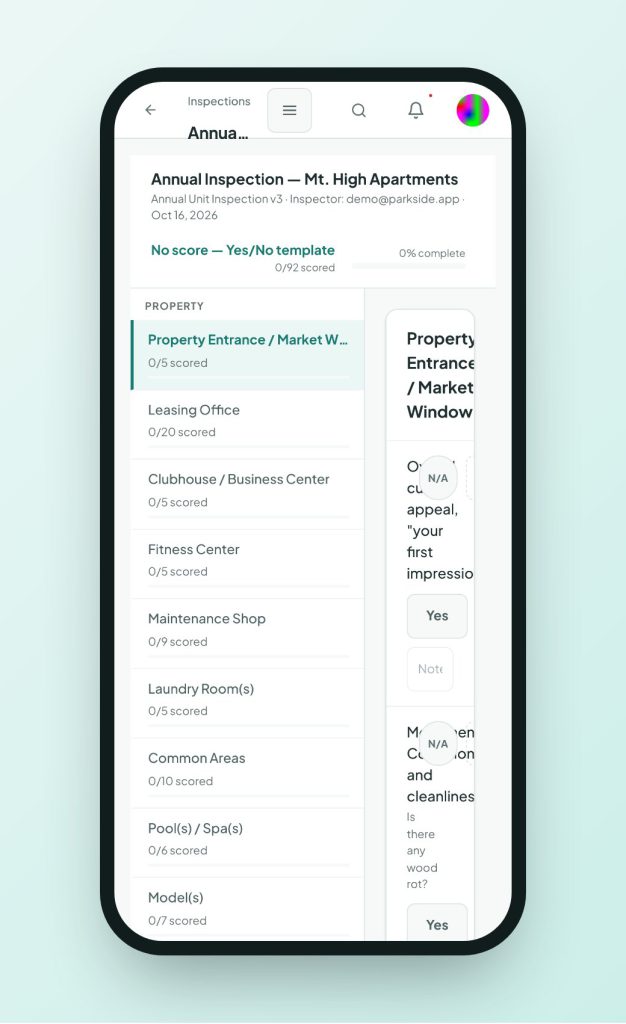
The Annual Unit Inspection is one of three example templates every new organization receives. It can walk every unit: choose All units when you schedule it, or pick hand-selected units. Sections are scoped to property, vacant units or occupied units, and the starter version is all yes/no. You can add count and text answers, photo-required items and a letter-grade scale if you want one.
Inspectors answer on a phone, add notes and photos with capture timestamps, and mark items N/A. A No raises an area of concern, which becomes a work order or turn task in one step. An inventory-verification pass can be added to confirm each installed item or flag a discrepancy: wrong make, model or serial, missing, or found but not recorded.
- Walk all units, sampled units, one unit or hand-picked units
- Concerns become work orders or turn tasks
- Optional inventory verification of installed items
Close out with a report
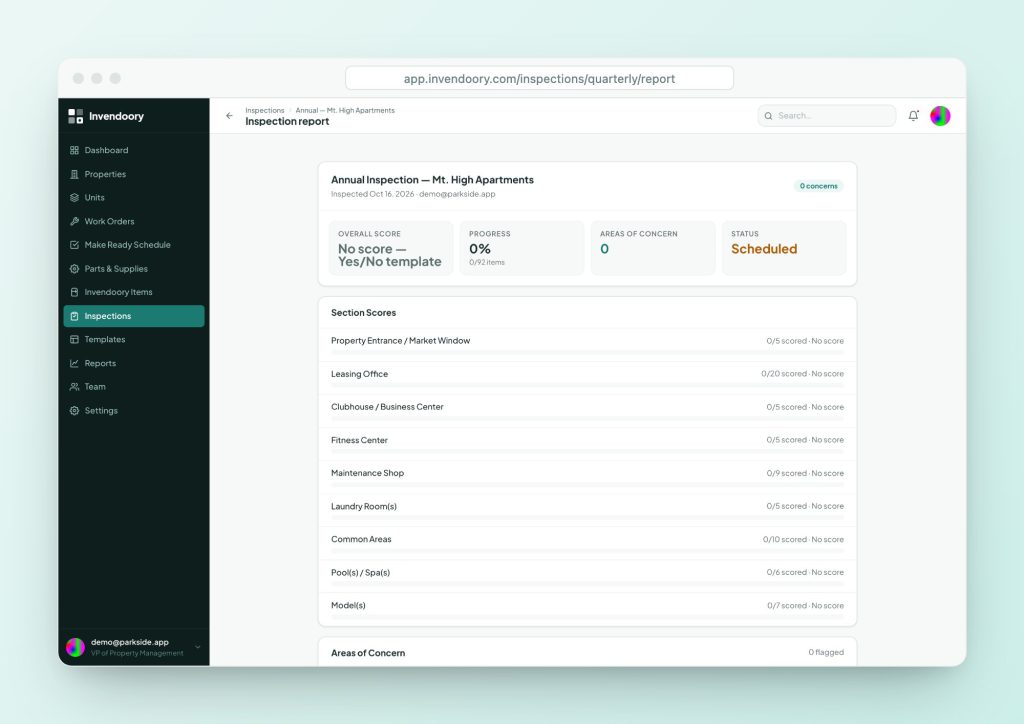
The inspection report collects results, concerns and photos in a printable page. Both the inspector and the community manager sign, then a manager submits with comments. Because editing a template publishes a new version, last year’s inspection keeps the wording it was answered with. See property inspection reports and the inspections platform page.
Questions people ask
What is an annual apartment inspection?
It is a yearly interior walk of a rental unit to check safety devices, plumbing, appliances, electrical, windows and general condition. It is separate from move-in and move-out inspections.
What should be on an annual inspection checklist?
Entry and windows, lighting, smoke and CO alarms, kitchen appliances and plumbing, bathroom fixtures and ventilation, HVAC, water heater, dryer vents, electrical safety and signs of pests. Add property-specific items.
Do I need to give notice before an annual unit inspection?
In most places, yes. Notice periods and permitted reasons differ by state and city and are often written into the lease. Check local law or ask an attorney before you schedule.
How is an annual unit inspection different from a quarterly inspection?
A quarterly inspection scores the site and a small sample of units. An annual inspection walks the interior of units, up to every unit. See the quarterly property inspection guide.
Why use yes/no questions instead of a 0 to 5 score?
Yes/no questions are quicker, more consistent between inspectors and map directly to repair tasks. The tradeoff is no score percentage, so you report on counts of failures instead.
Can the annual inspection also update the inventory?
Yes. In Invendoory you can add an inventory-verification pass to confirm each installed item or flag a discrepancy, so the record stays accurate.
Sources
- NFPA, Smoke Alarms at Home safety tips
- NFPA, Clothes Dryer Safety tips
- CPSC, Avoiding Tap Water Scalds (publication 5098)
- CPSC, Range Tipover Safety Alert (publication 5007)
Checked October 2026.