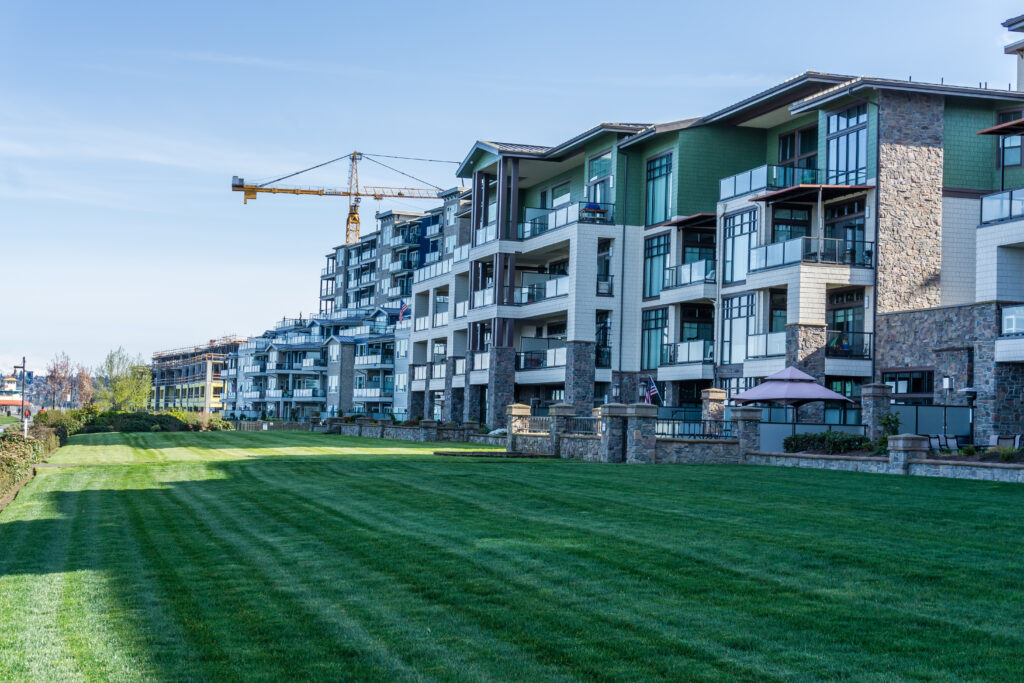
A reserve study tells you what you will need to replace, when, and how much to set aside each year. This guide explains how one is built and where unit-level inventory data can feed it.
What a reserve study is
A reserve study is a long-range plan for replacing the major components a community is responsible for. Community associations use it to avoid special assessments and deferred maintenance. The National Reserve Study Standards, published by the Community Associations Institute (CAI), say a study has two parts: a physical analysis and a financial analysis.
The physical analysis covers the component inventory, a condition assessment and estimates of life and cost. The financial analysis covers the current fund status and a recommended contribution rate, called the funding plan. The standards set the funding plan minimum at 20 years.
This guide is general information. Reserve requirements are set by state law and your governing documents, and a qualified reserve specialist should prepare the study. Confirm legal obligations with counsel.
The parts of a reserve study
Five tasks make up a full study.
1. Component inventory
Select and quantify what the association must replace, from site visits, governing documents and past practice.
2. Condition assessment
Evaluate each component’s current condition from what is observed or reported.
3. Life and cost estimates
Estimate useful life, remaining useful life and current replacement cost for each component.
4. Fund status
Compare the reserve balance to what it should be, measured in cash or percent funded.
5. Funding plan
Set the annual contribution needed to pay for the replacements as they come due.
What counts as a reserve component
CAI’s standards describe a reserve component with four traits. It is the association’s responsibility, it has a limited useful life, its remaining life is predictable, and its cost is above a minimum threshold. Roofs, paving, mechanical equipment and similar common elements typically qualify. A faucet washer does not.
Remaining useful life is how long until a component needs replacing. Effective age is useful life minus remaining life, and it is not always the same as calendar age because some components age unevenly. A component due in the first budget year has a remaining life of zero.
The standards give a simple example of a fully funded balance: a component with a $10,000 replacement cost, a 10-year useful life and an effective age of 4 years should have $4,000 set aside, which is current cost times effective age divided by useful life.
Full study or update: which level of service do you need?
| Level | Tasks performed |
|---|---|
| Full | Component inventory with quantities, on-site condition assessment, life and cost estimates, fund status, funding plan |
| Update with site visit | Inventory verified, on-site condition assessment, life and cost estimates, fund status, funding plan |
| Update without site visit | Life and cost estimates, fund status, funding plan, with no on-site observation |
| Preliminary | For a community not yet built: inventory, life and cost estimates, funding plan from design documents |
Levels as described in CAI’s National Reserve Study Standards (updated 2016). Check the current edition.
State laws on reserve requirements differ
Some states require reserve studies and many do not. California is a detailed example. Civil Code section 5550 requires a board to have a visual inspection and study of major components at least once every three years, when the replacement value of those components is at least one-half of the association’s gross budget, and to review the study every year.
The California statute sets minimum contents: components with less than 30 years of remaining life, their probable remaining useful life, a cost estimate, the annual contribution needed and a reserve funding plan. Other states, including those that regulate condominium structural safety, set their own deadlines and scopes, and those rules have changed recently.
If you manage a condo or HOA, ask counsel which statute applies and what your board must disclose. Do not assume another state’s rule applies to you.
How unit-level data feeds the study and your capex budget
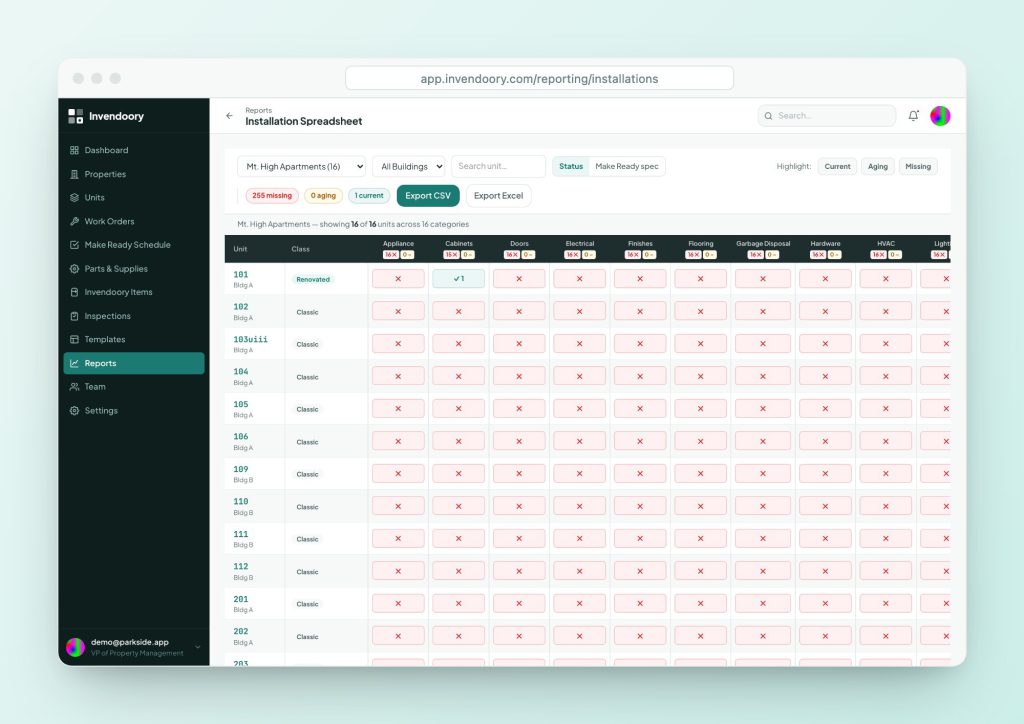
A reserve specialist builds the component list. They will ask for what you already know: how many of each item, how old, and what has been replaced. The more of that sits in a record, the less is estimated on a walk-through.
Invendoory records the items in every unit and their install dates, expected life and years left. Where the association or owner is responsible for those items, such as water heaters, HVAC equipment, flooring or appliances in units it holds, that data gives your reserve provider component quantities and remaining life without a new count.
Be realistic about the limits. Roofs, paving, elevators and other common elements are not what the inventory covers, and Invendoory does not produce a funding plan or percent-funded figure. It supplies unit-level facts the study can use. For the building systems, a property condition assessment is the usual source, and capital planning shows how to roll both into one capex budget.
- Quantities by item type and property
- Install date and expected life per item
- Years of life left, from the life used bar
A replacement reserve for apartment owners
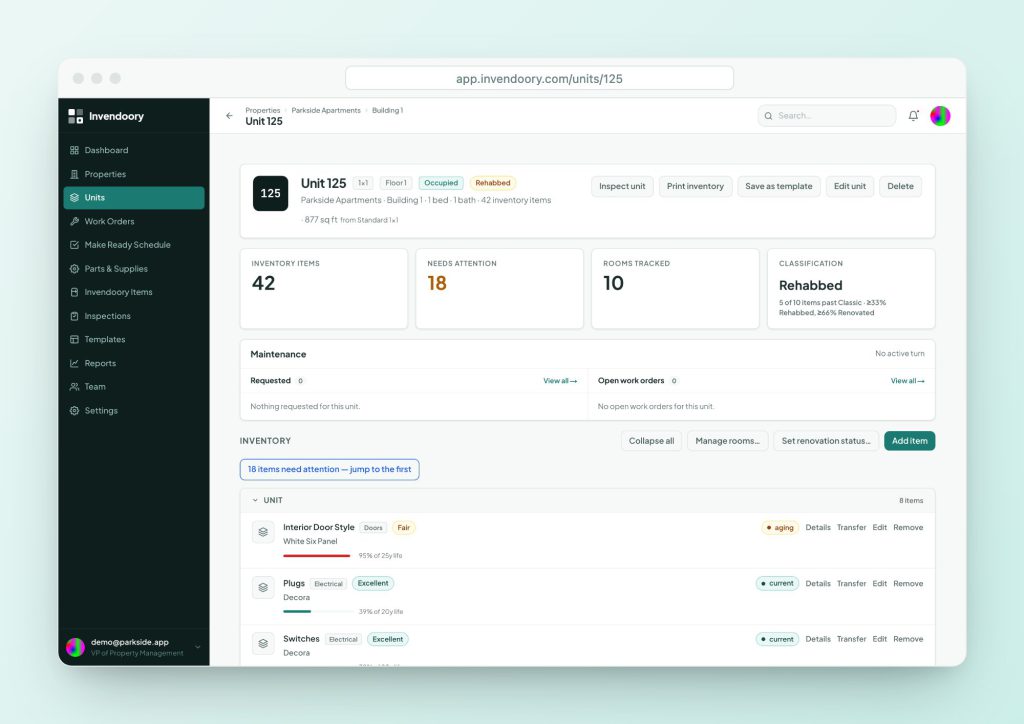
Single-owner apartment communities do not file reserve studies the way associations do, but the same logic applies. Lenders commonly require a replacement reserve, and many owners keep an internal reserve or capex budget for the same reason: replacements are predictable if you know the remaining life.
A unit inventory lets you roll up how many items reach the end of life in each year. The asset inventory shows the install date and years left for each item, and the Budget Projection compares what you planned to spend with what you did.
The point is the same for an association and an owner: replacements arrive on a schedule. Plan for them, or pay for them as surprises.
- Years left per item, across units
- Budget vs actual by category and fiscal year
- Reports export to CSV and Excel
Reserve study questions
How often should a reserve study be updated?
It depends on state law and your governing documents. California requires an inspection and study at least every three years under certain conditions, plus an annual review. Many associations update annually in between. Ask counsel and your reserve provider what applies to you.
What is remaining useful life?
It is the estimated time until a component needs replacement. A component due in the first year of the study has a remaining useful life of zero, even if the replacement is deferred. Estimates change as conditions and costs change, which is why studies are updated.
Who prepares a reserve study?
Usually a reserve specialist or engineer, working with the board or manager. Some states require a qualified professional. The board remains responsible for reviewing it and acting on it. Use someone experienced with your property type.
Is a replacement reserve the same as a reserve study?
No. The study is the analysis. A replacement reserve is the money set aside, often required by lenders for apartments. A study can set the amount, and a lender may set a minimum on its own. They serve the same goal.
Does Invendoory produce a reserve study?
No. It records unit-level items with install dates, expected life and years left, and reports budget vs actual. Those facts can feed a reserve specialist’s component data, but the study and funding plan come from a qualified provider.
Sources
- Community Associations Institute, National Reserve Study Standards (updated November 30, 2016) (Study structure, component test, levels of service, 20-year minimum funding plan, fully funded balance example.)
- California Civil Code section 5550 (California Public.Law) (Inspection frequency, annual review and minimum contents of the study.)
- Fannie Mae Form 4099.F, Estimated Useful Life Tables (Example of the useful-life tables lenders use in property condition assessments and reserve schedules)
Checked October 2026.