HVAC serial number lookup: free finder for furnaces and condensers
Use this HVAC serial number lookup to see when the furnace, air handler or outdoor unit was built. Pick the brand and type the serial number from the rating plate. Goodman, Amana, Carrier, Trane and Heil are covered.
How old is my furnace or HVAC unit?
Choose the brand, then copy the serial number exactly as printed on the rating plate.
Results are estimates of the manufacture date. The rating plate and the manufacturer’s support line are the authority.
HVAC age by serial number starts at the rating plate
An HVAC serial number lookup is easier than it looks, because most of these brands use plain digits for the date. The serial is on the rating plate of the furnace, the air handler or the outdoor unit. A split system has at least two plates, and the two parts may not be the same age. A condenser can be replaced while the furnace stays.
Copy the serial, not the model number, and pick the brand. The tool returns a manufacture date, the age in years and the share of a 15-year typical life used. If the plate prints a manufacture date, trust it over the serial.
The date is when the unit was built. Add a few months for the install.
HVAC serial number lookup: five brands and how they write the date
Each brand has its own page with a worked example. The last column says how well the rule is backed. None of these brands publishes a consumer decoder that we could find.
| Brand | How the date is written | Example | Tool reads it as | How well sourced |
|---|---|---|---|---|
| Goodman | Year, then month, on a 10-digit serial. | 0408 52398 | August 2004 | Two third-party references agree |
| Amana | Same as Goodman. Before about 2001 only the year, after a dash. | 0211847363 | November 2002 | References differ slightly on the month position |
| Carrier and Bryant | Week, then year, a letter, then five digits. | 4006A17330 | Week 40 of 2006 | Several references agree |
| Trane and American Standard | Year, then week. Nine characters for 2002 to 2009, 10 since. | 17103N6MF4 | Week 10 of 2017 | Three references agree |
| Heil and ICP brands | Letter, year, week on most units. | G051650885 | Week 16 of 2005 | Two references agree |
Rated from our research: Carrier and Trane are the strongest, Heil the loosest.
Brands that share a code
Amana heating and cooling is built by Goodman, so it follows the Goodman layout. Bryant uses the same layout as Carrier, according to two references. Heil belongs to the International Comfort Products (ICP) family, which also made Tempstar, Comfortmaker and Arcoaire, and InspectApedia says they share one code.
Payne is owned by Carrier, but we found no source showing its serial layout, so the tool does not name it. If you have a Payne unit, use the plate.
How long should an HVAC unit last?
The tool measures age against 15 years. Published ranges are wide and they differ by equipment. NAHB lists 15 to 20 years for a furnace, 10 to 15 for a central air conditioner and 16 for a heat pump. InterNACHI lists 15 to 25 for a furnace, 7 to 15 for an air conditioner and 10 to 15 for a heat pump.
The Department of Energy suggests starting to think about replacement when a heat pump or air conditioner passes 10 years, or a furnace or boiler passes 15. So treat the 15-year bar as a flag, not a verdict. Our HVAC life expectancy guide compares the sources.
What the tool cannot read
Some HVAC serials are outside the rules we could confirm:
- Trane serials from before 2002, because sources disagree on the old letter chart
- Carrier-family serials from before 1985
- Goodman units with letter codes, including some PTAC units, and Goodman units from before the 1990s
- Amana letter-coded units from before about 2001
- Heil and ICP serials in numeric-only or Z-letter styles
The tool says “can’t date” for these. Check the plate for a printed date, or call the manufacturer’s support line with the model and serial.
Track furnaces and condensers by life used
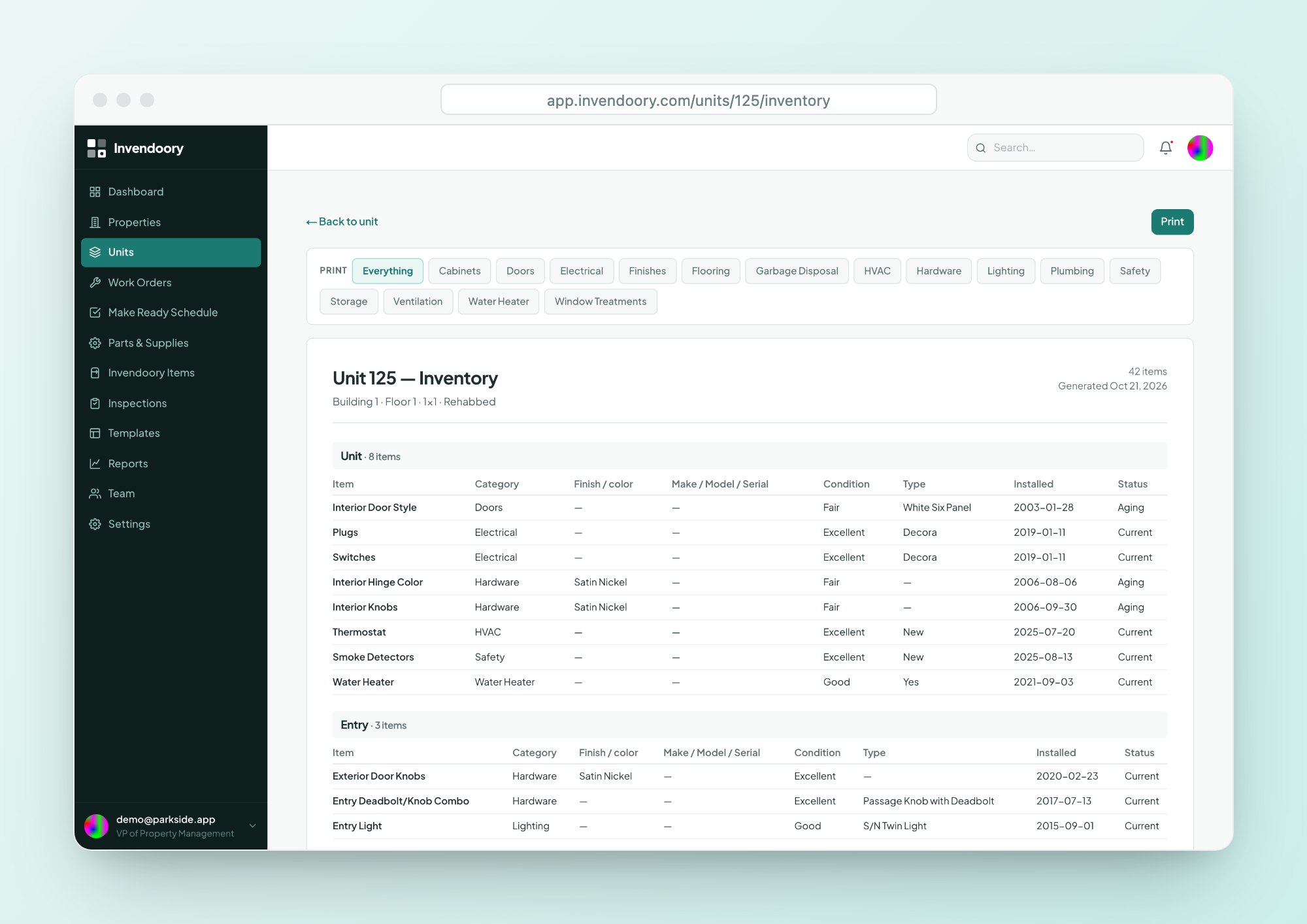
In Invendoory, HVAC is an item in the unit’s inventory with a serial, install date, warranty expiry and expected life. A life-used bar turns green under 60%, amber from 60% to 80% and red above that. Photos can be tagged as the serial plate.
That lets a supervisor see which units are closest to the end of their life before a hot week. Read about the asset inventory, or use the Appliance Age Finder for water heaters and appliances.
HVAC age questions
How do I find HVAC age by serial number?
Find the rating plate on the furnace, air handler or outdoor unit, copy the serial and choose the brand. The tool returns an estimated manufacture date and the age in years. The plate itself sometimes prints a manufacture date, and that is more reliable than the serial.
How do I find furnace age by serial number?
Look for the rating plate on the side or back of the furnace, copy the serial and choose the brand. Goodman, Amana, Carrier, Trane and Heil furnaces are covered. A furnace is often older than the outdoor unit it is paired with, so read each plate on its own.
Where is the serial number on a furnace or condenser?
It is on the rating plate, a label on the side or back of the furnace or air handler, and on the side panel of the outdoor unit. Photograph it. A split system has plates on each part, and the parts can have different ages.
Why can't the tool date my Trane?
The tool reads Trane and American Standard serials from 2002 onward. Older serials use a letter-year chart that sources disagree on, so we left them out rather than guess. For older units, rely on the plate or ask Trane’s support.
What is the typical HVAC life?
The tool uses 15 years. Published ranges run from 7 to 25 years depending on equipment and source. NAHB lists 15 to 20 for a furnace and 10 to 15 for an air conditioner. Use the bar as a flag to inspect, not a replacement date.
Is the manufacture date the install date?
No. The manufacture date is when the unit was built. The install date is usually a few months later. If you have the install date, use it for depreciation and warranty. If not, the manufacture date is a good proxy.
Sources
- PickHVAC – How old is my Goodman
- Building Intelligence Center – Goodman HVAC age
- PickHVAC – Amana HVAC age
- Building Intelligence Center – Amana HVAC age
- Building Intelligence Center – Carrier HVAC age
- PickHVAC – Carrier HVAC age
- PickHVAC – Bryant HVAC age
- PickHVAC – Trane HVAC age
- Building Intelligence Center – Trane HVAC age
- Parts Town – Trane serial number lookup
- Building Intelligence Center – Tempstar HVAC age (ICP family)
- InspectApedia – Tempstar and ICP HVAC age
- Building Intelligence Center – Heil HVAC age
- NAHB and Bank of America Home Equity, Study of Life Expectancy of Home Components (2007)
- InterNACHI, Estimated Life Expectancy chart
- U.S. Department of Energy, Energy Saver Guide (2022)
Checked October 2026.
Keep HVAC age on file for every unit
Invendoory records the serial, install date and life used for every HVAC item. Open the live demo, no signup needed.